The four checks below turn a broad equipment question into information that can be measured, compared and included in a technical specification.
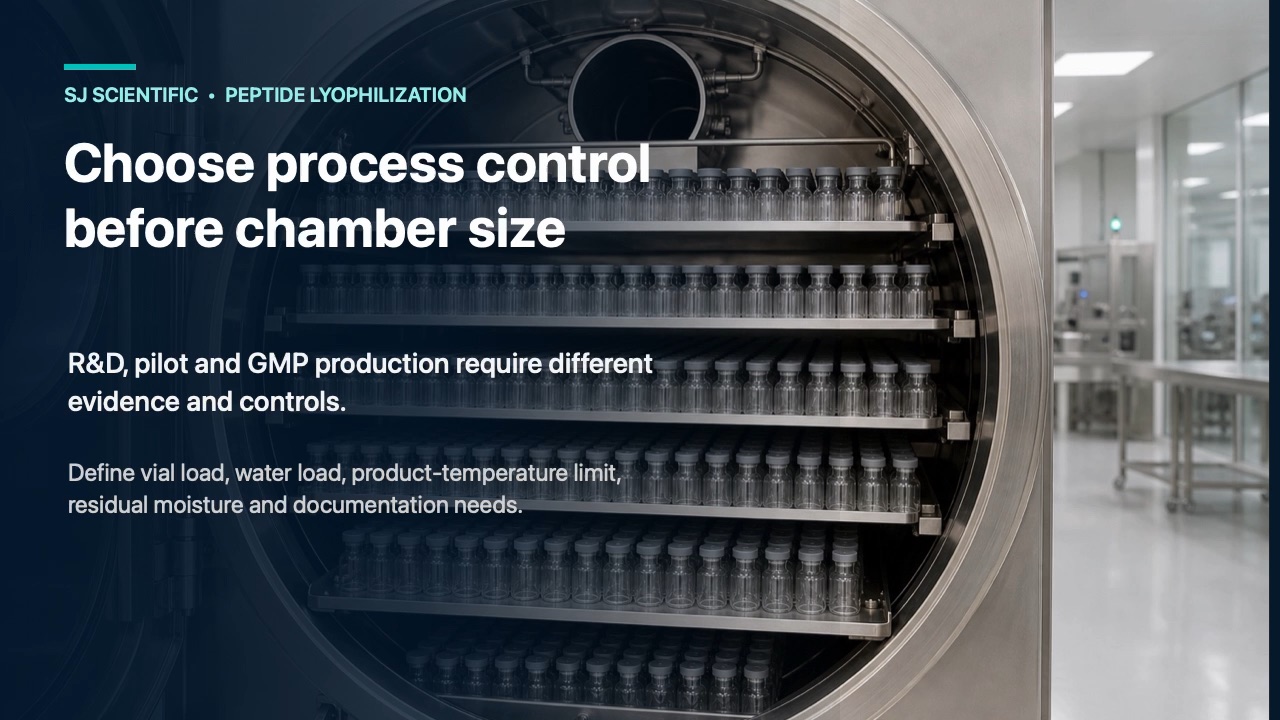
A short selection overview connecting controlled-shelf development, vial loading, condenser duty, and the transition into GMP peptide lyophilization.
1. Characterize critical temperatures and formulation behavior first.
Establish glass transition, collapse or eutectic behavior and the quality risks for the peptide formulation. Primary drying must keep the product within the justified temperature limit.
2. Compare vial heat-transfer coefficients between development and production units.
Compare vial type, fill depth, loading pattern and estimated vial heat-transfer coefficient. Edge-vial behavior and partial loading can change between development and production chambers.
3. Use pressure and product-temperature evidence to control primary drying.
Use product temperature and a justified endpoint method alongside chamber pressure. Confirm that the production condenser and vapor path can manage peak sublimation without loss of pressure control.
4. Plan engineering batches and acceptance criteria before PPQ.
Plan engineering runs with predefined acceptance criteria for cake, residual moisture, assay, reconstitution and other critical attributes before process performance qualification.
What to send with an inquiry
Include the product, starting quantity, water or solvent content, container or tray dimensions, expected cycles per week, target endpoint, installation country and available utilities. For regulated projects, add the intended automation, qualification and documentation scope.
This page provides general engineering and operating context. The model-specific manual, approved site procedure, technical agreement and product validation take priority.